Website Technical Audit: What It Is and Why Your Business Needs One
Think of your website as a car.
It may look excellent from the outside.
That does not necessarily mean everything under the hood is working correctly.
Websites are similar.
A beautiful design does not guarantee a fast website, a good mobile experience, strong Google visibility or the absence of hidden problems.
A website audit helps you understand what is actually happening.
What is a website audit?
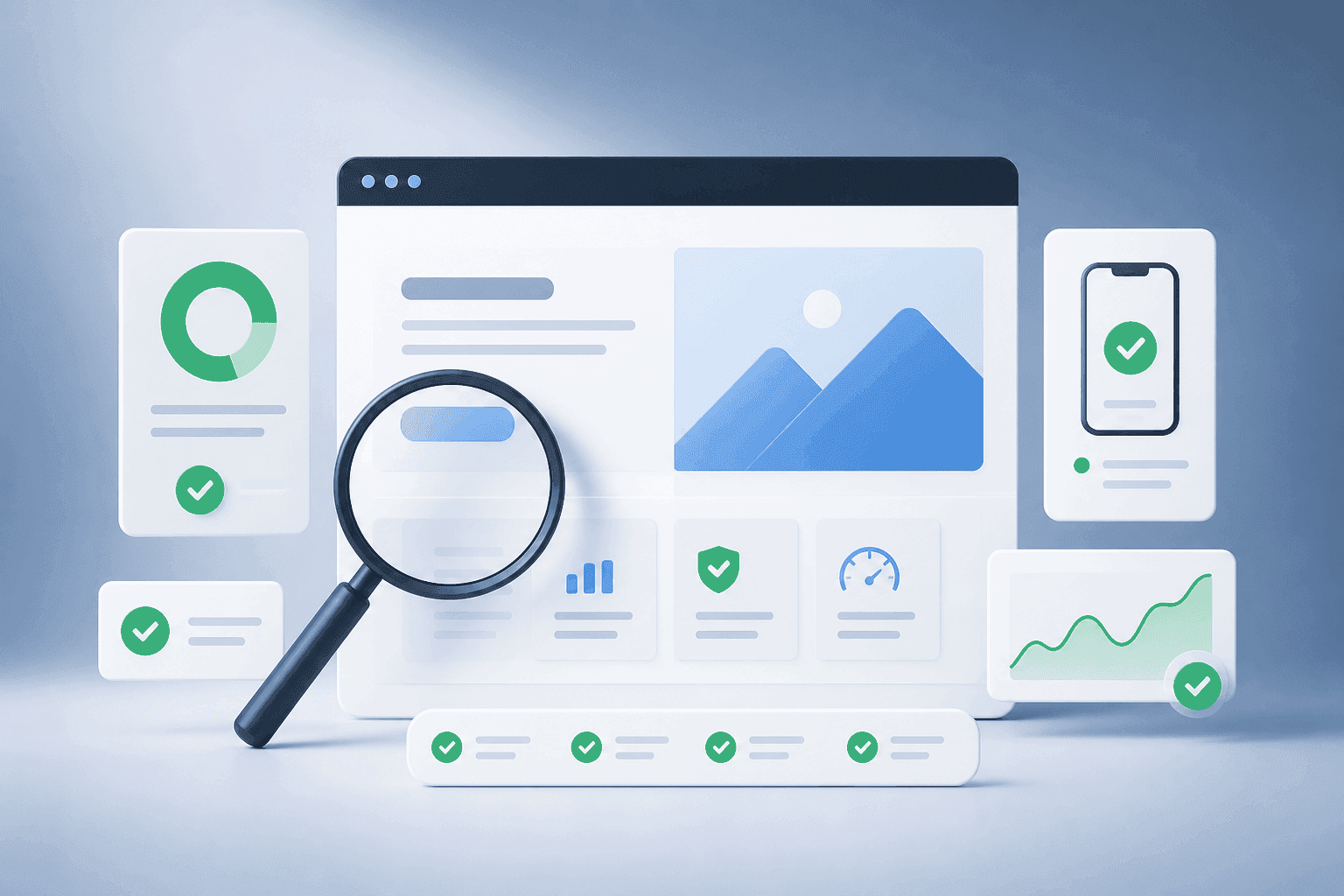
In simple terms, it is a health check for your website. Instead of looking only at the design, an audit examines how the website works for:- customers;
- smartphones;
- search engines;
- browsers;
- your business.
When should you audit your website?
You do not have to wait until something breaks. An audit is particularly useful when:- the website has become slow;
- very few visitors arrive through Google;
- important pages are missing from search;
- advertising gets clicks but few enquiries;
- the mobile experience is poor;
- you are planning a redesign;
- nobody has properly maintained the website for years;
- you are changing developers or agencies;
- nobody really knows the current condition of the website.
What does an audit check?
A useful audit should answer practical questions.Does everything actually work?
Websites can contain broken pages, incorrect links and other problems that business owners rarely notice. One small issue may not matter much. But over several years, many small issues can build up.Is the website fast enough?
People do not like waiting. Someone clicks your Google result or advertisement because they are interested. If the page takes too long to appear, some of those potential customers will leave. Website speed is therefore not just a technical metric. It can affect business results.Does it work properly on a phone?
A website can look excellent on a large desktop monitor and be frustrating on a smartphone. Buttons may be too small. Text may be difficult to read. Menus may not work correctly. Forms may be difficult to complete. Those small problems can directly reduce enquiries.Can Google see the website properly?
A website may work perfectly for normal visitors while search engines struggle with some of its pages. That can mean less organic traffic and fewer potential customers discovering the business. An audit helps identify those problems.Is the website easy to understand?
A visitor should quickly understand:- who you are;
- what you offer;
- why they should trust you;
- what they should do next.
Has the website collected too much old baggage?
Websites tend to collect digital clutter. Old pages. Unused functionality. Outdated integrations. Old scripts. Services your business no longer provides. Individually, these may look harmless. Together they can make a website slower, harder to manage and less reliable.An audit does not automatically mean you need a new website
This is important. A good audit should not automatically end with:You need to rebuild everything.Sometimes a rebuild really is the best solution. But sometimes the existing website only needs a few focused improvements. An audit gives you the information needed to make that decision.
What should a business owner receive after an audit?
Not just a list of errors. A useful audit should explain:- what the problem is;
- why it matters;
- how important it is;
- what can be done;
- what should be fixed first.
Why audit before a redesign?
A redesign without an audit can move old problems into a brand-new website. It can also accidentally remove things that were already working well. It makes more sense to first understand:- what should stay;
- what needs improvement;
- what can be removed;
- what the business actually needs.